How to Effectively Manage Time with the Pomodoro Technique
How to Effectively Manage Time with the Pomodoro Technique
In an era of constant notifications, endless social media feeds, and demanding project deadlines, maintaining focus can feel like an insurmountable challenge. The modern workplace—whether remote or in-office—is fraught with distractions. As developers, designers, and digital professionals, our ability to engage in prolonged, uninterrupted "deep work" is our most valuable asset.
If you find yourself constantly shifting contexts, struggling to start large tasks, or experiencing mental burnout by mid-afternoon, you need a structured approach to time management. Enter the Pomodoro Technique.
Understanding the Pomodoro Technique
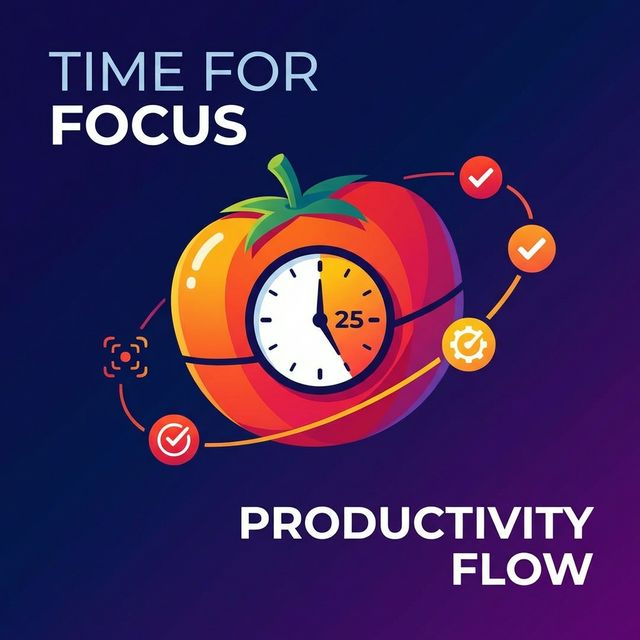
Developed by Francesco Cirillo in the late 1980s, the Pomodoro Technique is renowned for its simplicity and effectiveness. It utilizes a timer to break down work into intervals—traditionally 25 minutes in length—separated by short breaks. Each interval is known as a "Pomodoro," from the Italian word for tomato, named after the tomato-shaped kitchen timer Cirillo used as a university student.
The core philosophy of the technique is that frequent breaks improve mental agility. By creating an artificial sense of urgency, you force yourself to focus intensely on a single task, completely ignoring all external stimuli until the timer rings.
The Mechanics of Focus
- Choose a Task: Select a single, concrete task you want to accomplish. It could be fixing a specific bug, writing a blog post, or replying to urgent emails.
- Set the Timer: Set your Pomodoro Timer for 25 minutes.
- Work Until the Timer Rings: Immerse yourself entirely in the chosen task. Do not check your phone, do not browse the web, and do not shift your attention to an incoming Slack message. Close your email client if necessary.
- Take a Short Break: When the timer rings, you have successfully completed one Pomodoro. Take a short 5-minute break. Step away from your computer, stretch, grab a drink of water, or look out a window to rest your eyes. This break is non-negotiable; it gives your brain time to assimilate the information you just processed and prevents cognitive fatigue.
- Take a Long Break: After completing four Pomodoros (approximately two hours of focused work), take a longer, 15 to 30-minute break. Use this time to recharge completely before beginning the cycle again.
Overcoming the Execution Gap
While the rules are simple, executing the Pomodoro Technique requires discipline. The biggest challenge is internal and external interruptions.
Managing Internal Interruptions: If a random thought or an unrelated to-do item pops into your head during a Pomodoro, do not act on it. Instead, keep a notepad next to you. Jot the thought down immediately and return your focus to the current task. You can review your notes during a break.
Managing External Interruptions: If a colleague asks a non-urgent question, politely inform them you are in the middle of a focused block and will get back to them in "X" minutes when your timer finishes. Most people will respect your boundaries. If a genuine emergency arises, you must completely abandon the current Pomodoro—a Pomodoro cannot be paused; it is indivisible. You must start a new 25-minute cycle when the emergency is resolved.
The Role of the Digital Pomodoro Timer
While a physical kitchen timer works, a digital Pomodoro Timer offers significant advantages for digital workers.
A dedicated web tool ensures that your timer remains visible on your screen, serving as a constant visual reminder of your commitment to focus. Look for a timer that handles the transitions automatically—switching seamlessly from a 25-minute work block to a 5-minute short break, and tracking your completed Pomodoros so you know when it's time for a long break.
Using an independent tool like the one on Universal Web Toolkit also prevents you from falling into the trap of using your smartphone as a timer. Picking up your phone to start a timer is a massive risk; a single notification can instantly derail your focus and ruin your intent before you even begin working.
Adapting the Technique to Your Workflow
The 25/5 minute ratio is the traditional starting point, but it's not a rigid law. As you become more experienced with the technique, you should adapt it to fit your personal workflow and the nature of your tasks.
The "Deep Work" Modification
If you are a programmer writing complex logic or a writer drafting a long-form article, 25 minutes might not be enough time to enter a state of flow. Some professionals find success by extending their work blocks to 50 or 90 minutes, followed by 10 to 15-minute breaks. The key is to find the maximum duration you can sustain absolute focus before experiencing cognitive decline.
The "Task Batching" Strategy
For small, administrative tasks (like sorting emails, paying bills, or organizing files), a single 25-minute block might be too long. In these cases, use the technique to "batch" similar tasks together. Try to complete as many small, related items as possible within a single Pomodoro to maximize efficiency and minimize context switching.
Conclusion
The Pomodoro Technique is entirely about intent and execution. By embracing structured constraints and honoring your scheduled breaks, you transform time from an adversary slipping through your fingers into an ally working in your favor.
Stop wrestling with willpower and start managing your focus. Open a Pomodoro Timer, select your most important task, and start the clock. You'll be amazed at what you can achieve in 25 uninterrupted minutes.